
The Aura I Didn't Know I Carried
- Katherine Tatsuda

- Dec 2, 2025
- 3 min read
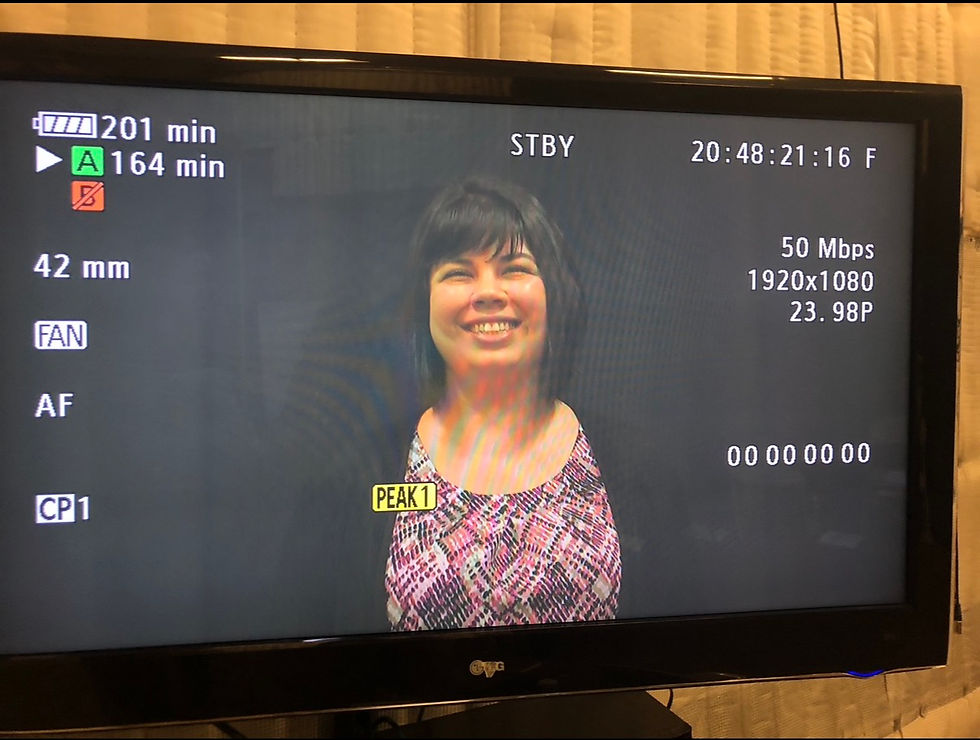
In February 2020, I went to acting school in West Hollywood—a Method Acting Intensive focused on TV and film that I had dreamed about for years. I had worked hard to reach a place in life, and inside Tatsuda’s, where I could step away long enough to pursue it.
And I was terrified.
Not stage-fright terrified—identity terrified.
Imposter syndrome had me convinced someone would look at me and ask why I thought I belonged there. That they’d tell me to go home.
To counter that fear, I leaned on the one part of Michael Singer’s Untethered Soul that ever stuck with me: thoughts are just thoughts. Not truth, not instruction. Often just old, automatic wiring trying to keep us “safe.”
So I practiced thinking differently every time my mind whispered you’re not good enough—not fighting the thought, simply not believing it.
Fast forward to LA.
Day two or three of acting school.
My class was a global mix—an actress from Mexico, one from France, a businessman from Austria, two Bollywood superstars from India, a Canadian actor starring in an Amazon series. No one questioned why I was there. My instructors didn’t either. They told me I could get cast.
And then came the exercise.
We had spent a couple of days on method basics—listening, relaxation, monologues—before our instructor said we were ready for camera work. But first, she told us, we would learn our type: the energy we give off before we speak a single line. The unspoken story our aura tells. A crucial thing to know when you’re starting out, she said, because you need to audition for roles that naturally fit you.
The exercise was simple:
One person sits in a chair for three minutes.
Everyone else stares at you.
They feel you.
They watch.
They judge.
And then they tell you what they saw.
It was unexpectedly intimate—exposure without a script.
When it was my turn, I tried to radiate kindness. Silently sending “I care about you” toward each person, because at that time in my life, I was in my lift-everyone-up era.
Then the feedback came.
Kind. Nice. Friendly. Caretaker.
Predictable enough.
But then:
“Not quite trustworthy.”
“Something hiding beneath.”
And the unforgettable:
“She’s the friendly neighbor everyone loves who secretly murders kittens in her basement.”
My instructor was intrigued. She compared me to a particular actress known for layered, quietly unsettling character roles in dramatic comedies—someone consistently nominated for major awards.
It stunned me because I knew I had a secretive nature then.
I knew my boundaries were soft, and my patterns pulled me toward emotional unavailability.
But I assumed those shadows were invisible.
Apparently, they weren’t.
Apparently, that complexity made me compelling—
not because the shadow was disowned, but because it was leaking through.
A lot of life has happened since then.
I left that program early because of the landslide that destroyed my family’s store—a life-altering rupture that reshaped everything and caused the death of a dream and my identity. But that is not today’s story.
What matters here is that I’m not the woman I was in 2020.
My light and shadow are no longer strangers.
My trauma no longer drives the car.
I stand firmly in my values, and I actually live them.
I am integrated in ways that younger version of me didn’t yet know were possible.
So sometimes I wonder:
If I sat in that chair again today—three minutes across from a circle of strangers—what would they see?
Would I still read as the friendly neighbor with a dark mystery hidden in the basement?
Or would they sense a woman shaped by fire and loss,
who learned, healed, and grew—
a woman whose depth is no longer something to fear
because she finally made room for all of herself
to belong?


